
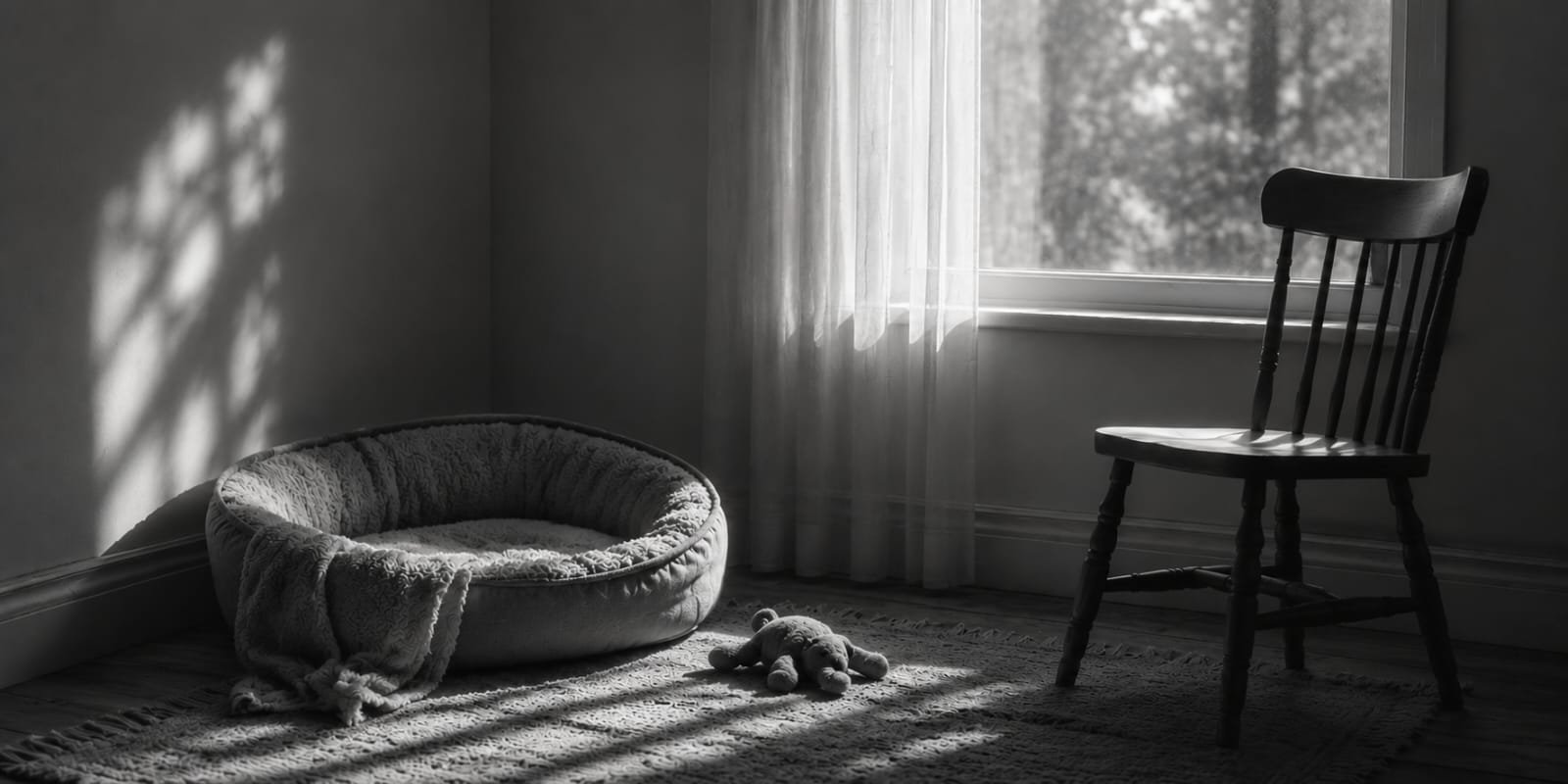
On Outliving What You Love
The harder test
The hardest test isn’t staying connected during struggle. It’s staying connected during success. When everything is fine, when the days are ordinary, when there’s no crisis to focus on, that’s when we forget to pay attention.
We don’t usually think about this until it’s too late. Until the ordinary day becomes the last day, and we realize we were somewhere else the whole time. Checking our phone. Thinking about tomorrow. Not really there.
Animals don’t give us that luxury of distraction. They show up completely. Every single day, without negotiation. They’re present in a way that makes our half-attention visible to us. A cat waiting by the window. A dog greeting us at the door with the same enthusiasm they had yesterday and will have tomorrow. A bird singing at the same time every morning. Presence without performance. Love without conditions.
And then one day, they’re gone. And we’re left with a strange mathematics: all those moments we missed, multiplied by the certainty that we can’t get them back.
This is the grief nobody talks about. Not the shock of loss that’s visible, recognized, spoken about at least. But the weight of recognition. The understanding that we had someone who loved us without conditions, without keeping score, and we were often too busy to notice. That we took for granted the most reliable presence in our lives because reliability becomes invisible. We stop seeing what’s always there.
The tragedy isn’t that they left. It’s that we spent so much time waiting for them to leave before we started really looking.
I know people who can describe in perfect detail what their pet wore to an event three years ago, but can’t remember the last thing their pet did before they died. I know people who took a thousand photos but were rarely in the moment those photos were capturing. I know people who kept meaning to document stories, to write down the funny things, to record the way their animal moved through the world and then ran out of time.
The guilt that comes after is particular. It’s not guilt for something you did wrong. It’s guilt for something you didn’t do right. For attention you didn’t pay. For moments you didn’t mark. For the person who loved you completely and you loved back, but not always in the way you wish you had.
We tell ourselves we were busy. We were working. We had obligations. And all of that is true. But it’s also true that we chose not to be fully present. We chose the distraction. We chose to treat the ordinary as background when it was actually everything.
The hardest conversations I’ve had are with people who say, “I wish I’d written down more. I wish I’d paid better attention. I wish I could remember exactly what they were like.” Not just the big moments, those we hold onto, but the small ones. The mundane Tuesday afternoon when nothing happened except that they were there. The way they moved through a room. The particular texture of their presence in our daily lives.
What we assume
We assume we’ll remember. We assume that when the time comes, the details will still be there. But memory doesn’t work that way. Memory is like a photograph left in the sun; it fades. Edges blur. Colors shift. What you remember with crystal clarity five years after their death is often not the thing you thought would stay with you forever. It’s the unexpected detail. The moment you didn’t think to mark as important.
This is why documentation matters. Not because your animal needs you to. But because you do.
Recording what you notice the way they greet you, their particular habits, the food they love, the toy they ignored, the spot where they like to sit, the sound they make this isn’t morbid. It’s the opposite of morbid. It’s an act of love that says: I was paying attention. I saw you. You mattered enough that I wrote it down.
PetIdealist exists because this realization shouldn’t come too late. Because the work of documentation is actually the work of presence. When you sit down to write about your animal, you’re forced to remember. You’re forced to really look at what you have. You’re forced to pay the attention you’ve been meaning to pay.
It’s not a replacement for being there now. But it’s an acknowledgment that now is the only time you have. That the ordinary Tuesday is the one that counts. That the person who loves you without reservation deserves to be seen, really seen, while they’re still here to be seen.
The debt we accumulate by loving an animal is real. And the way we pay it back isn’t with grand gestures. It’s with attention. With documentation. With the quiet, daily work of noticing. Of saying: this moment matters. You matter. I’m here, and I’m watching, and I’m writing it down so that someday when you’re gone, I’ll have proof that you were real. That we were real together.
That’s what we owe them. Not a perfect memory. But an honest record. A way of saying: I was present. I paid attention. And I’m keeping the evidence that you were loved.